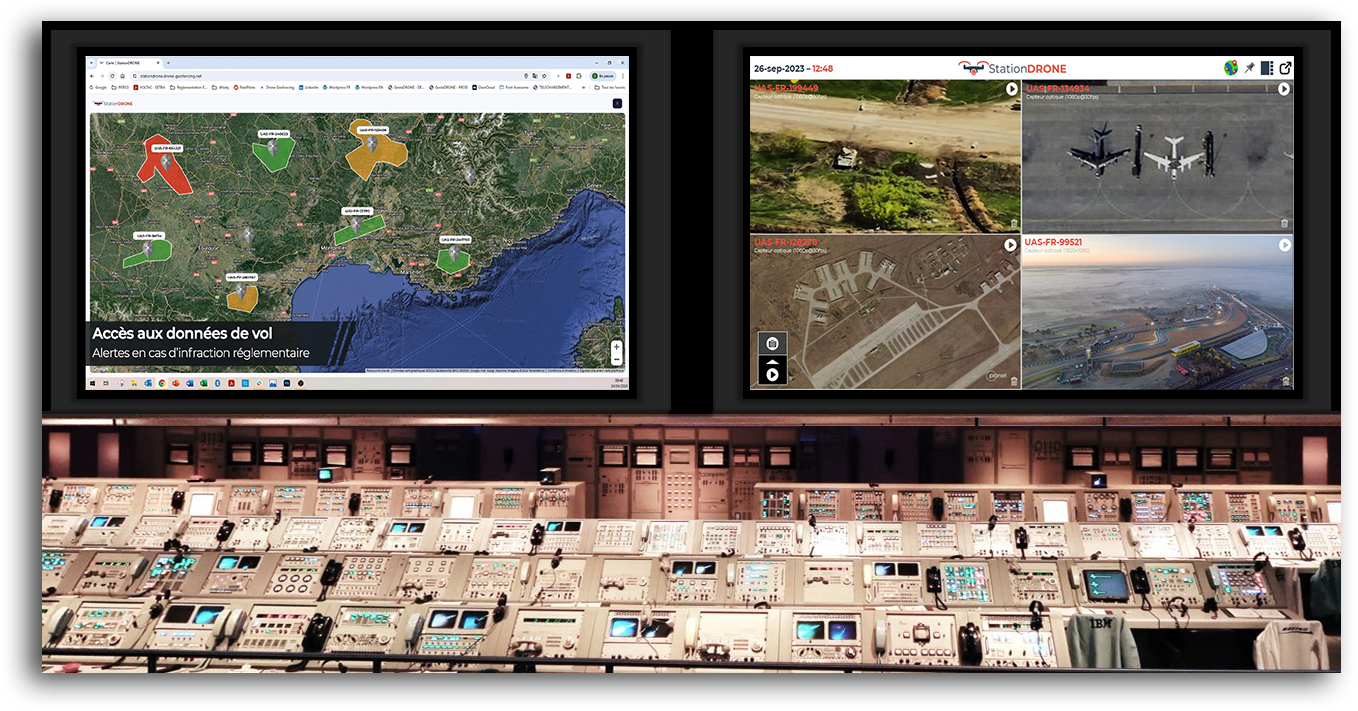

Discover the new MANEX drone operating manual.
To begin operating a UAS (Unmanned Aerial System) in a specific category within French and/or European low-altitude airspace, the operator must obtain an operating authorization, linked to their activity declaration, from the competent authority in their country. The MANEX (formerly the MAP) is a document prepared by a drone operator that outlines all the activities of the remote pilots, the aircraft, and the regulatory obligations. It is essential for ensuring the safety of the operation during flights and on the ground.
What does a MANEX plan contain?
As an introduction, the operator must commit to applying and complying with all aeronautical regulations that will be defined. They must also stay informed of regulatory changes and notify all stakeholders.
Subsequently, the drone operator presents the characteristics of his activity:
– The overall organization of the operation (organizational chart).
– The operational functions and responsibilities of each member of the operation: operator and persons responsible for each of the axes (remote pilot, maintenance, technicians, security…).
– All company activities with standard national scenarios (or with the regulatory transition a European scenario) planned.
– The means used, i.e. the list of all the aircraft he wishes to fly and their technical characteristics, specifying the activities that will be carried out and their maintenance conditions in order to ensure optimal airworthiness.
– An inventory of all drone pilots internal to the operation. Then, the operator must define the skills and training required according to the activities that will be carried out.
Secondly, the operator must define and describe an incident monitoring system in operation with the aim of improving safety during operations and then put in place the necessary measures to prevent the event from recurring.
Finally, the drone operator will establish the various procedures to follow to successfully carry out the operation:
The methods to follow before each operation:
– Maintenance and general advice to apply to an aircraft,
– Verification of all documents to be presented in case of inspection,
– Identification and protection of the overflight zone,
– Identification of all elements that could present risks during the flight,
– Verification of the skills of remote pilots,
For the drone operator to carry out their mission, they must comply with:
- general procedures applicable to all operations as well as procedures specific to a single operation.
- operating procedures for each type of aircraft: giving the aircraft category, operational performance, limitations and flight conduct.
- emergency procedures to follow in case of a problem (crash, etc.) and an intervention plan
The MANEX allows for the transcription of all information from the operator's activities; this document must always be archived.
As previously mentioned, this documentation is required for operating an aircraft within a standard national (or European) drone scenario. It must be updated to reflect any modifications. The operator must be able to present the updated MANEX (Manual of Air Operations) upon request, or face penalties.
To avoid these inconveniences, please note that we offer the Gesta software.DRONE which allows you to automatically generate a MANEX operating manual, to update the document in a few clicks, and then to communicate these updates in real time to the Directorate General of Civil Aviation (DGAC).
The use of unmanned aircraft requires appropriate regulation and airspace management. To address these issues, the European Union has established a regulatory framework to facilitate airspace management, U-space.
What is U-Space?
U-Space services are responsible for regulating and managing airspace with a high level of automation and digitalization. It's important to note that U-Space services only handle low-altitude air traffic management, meaning up to 120 meters. They provide information on available airspace, drone operation safety, and air traffic management to enable the safe and efficient use of drones, while also ensuring environmental protection and privacy. One of U-Space's primary objectives is to guarantee that drones do not disrupt existing air traffic.
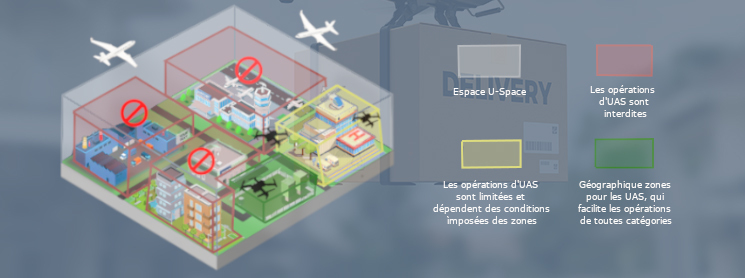
U-Space services offered to drone operators:
- Network identification which provides the identity of operators and UAS, as well as their geolocation, and the dissemination of information on operations to share relevant information with other airspace users
- Geovigilance which informs UAS operators of the operating conditions to be applied in U-space and the constraints related thereto, made available within the framework of common information services.
- UAS Flight Authorization which grants flight authorizations to operators based on operating areas and U-space constraints. This service also provides for the review and/or suspension of authorization depending on operating conditions.
- Traffic information which provides the operator with all information relating to air traffic that could occur in the vicinity of the UAS flight's intended position. And that it can implement the necessary measures to avoid a collision.
Two other services may be offered, iThey depend on the risk assessment in the airspace, and can be suggested at the initiative of the USSP (U-space Service Providers).
- Weather information which are put in place to allow operators to facilitate the planning and execution phases of the flight
- Compliance control which is used to verify whether UAS operators comply with flight authorization conditions. It also allows the UAS operator to be alerted if there is a compliance issue.
U-Space service providers are companies or organizations that provide services related to U-Space, such as traffic control, flight planning, activity monitoring, and more. Many U-Space service providers exist to help manage drone traffic. For example, several companies have joined the European U-Space network, such as U-Space Keeper and AirSpace Drone.
It is worth noting that the software mentioned above allows you to share U-Space for easier management. Our Gesta softwareDRONE is a universal tool that can interconnect with these different platforms in a cross-cutting manner, that is to say, it is connected with all actors to manage the procedures with the competent authorities issuing flight authorizations.
If this topic interests you, please note that additional articles will be available soon to follow up on this introduction.