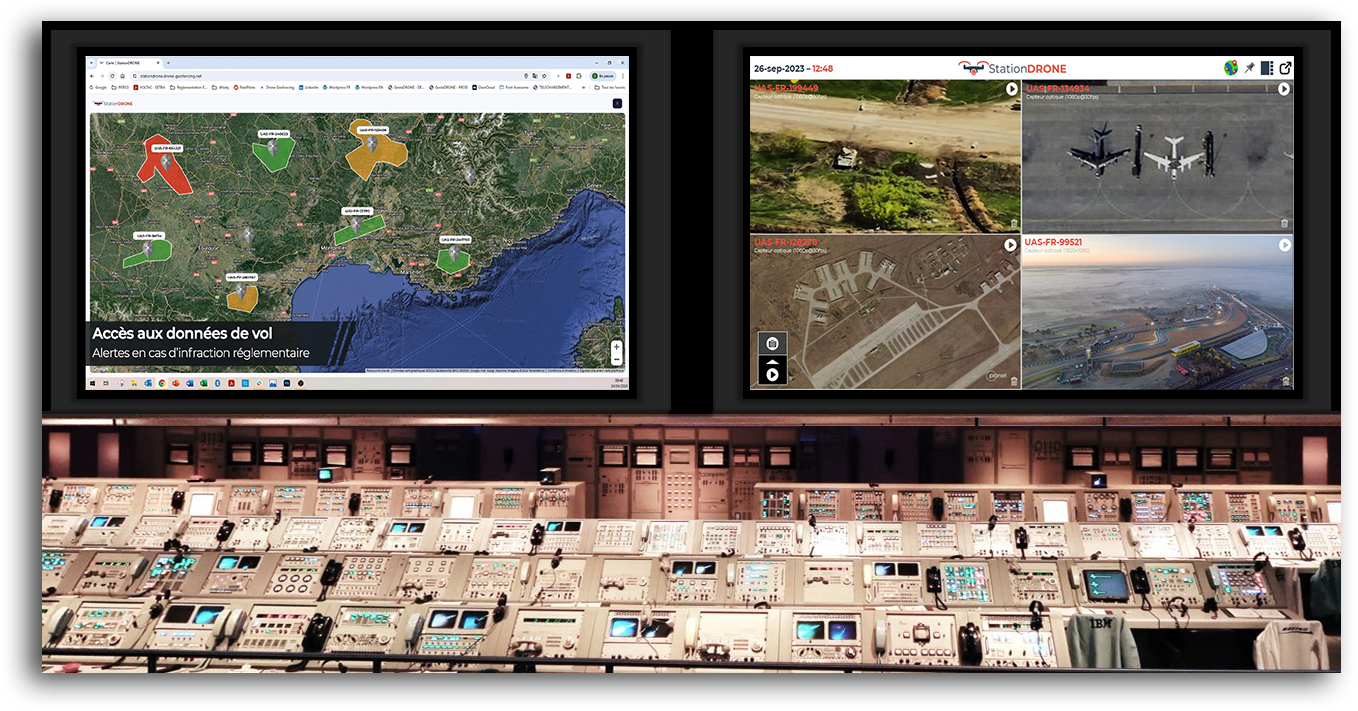

Having grown exponentially for many years, the use of professional civilian drones is heavily regulated to avoid accidents and ensure the safety of people operating nearby. To this end, numerous drone laws and regulations have been put in place. Responsibilities, in the event of a problem, are clearly defined between the aircraft manufacturer, the drone pilot, and the drone operator. Today, we will focus on the operator's responsibilities.
What are the obligations of a drone operator?
The drone operator must ensure that his company carries out its particular activities safely (i.e. those using a professional drone as a vector).To do this, the operator must demonstrate that:
- The use of these drones is part of specific activities (detailed beforehand to the DSAC).
- The organization he put in place to manage this activity is clear
- The sharing of responsibilities (particularly between the remote pilot, the safety monitoring officer, and the manager) is perfectly established AND
- That the operational procedures (before flight, in flight, emergency, RetEx, in case of equipment failure, etc.) are formalized and known to the remote pilots.
All this information is included in the Specific Activities Manual, and the drone operator must keep it constantly up to date (especially in the event of additions).
of an aircraft in its fleet and/or a remote pilot in its team).
Indeed, the DSAC (French Civil Aviation Authority) insists on ensuring that new (and experienced) remote pilots have a thorough understanding of the operator's aircraft before they can conduct any flight. If a remote pilot uses equipment without having demonstrated their knowledge of the MAP (Manual of Air Operations), the operator is directly liable.
What is the risk to the drone operator in case of an infraction?
The drone operator risks 1 year imprisonment and a fine of 75,000 euros if an aircraft of the operator is used outside the conditions of use defined in the MAP.
Let's now look in detail at the contents of the MAP
The MAP is segmented into two parts:
General information
It describes the organization put in place, the specific activities, the aircraft that will be used (by activity), the remote pilots (with a justification of skills), AND the procedures put in place to inventory/analyze/follow up on incidents that could occur.
The operator often poorly describes the impact of their actual job on each specific activity (particularly the internal training required to pilot the drone within the scope of their work). This could, in some cases, seriously implicate them in their liability, as the courts may hold them responsible for a lack of training among their remote pilots.
The use
It describes the company's flight procedures (before and during the flight) AND details all the operational specifics of each aircraft model of the operator.
Many operators refer to the manufacturer's user and maintenance/overhaul manuals in their Operational Manuals (OMs). It's worth noting that operators are legally obligated to produce these documents upon request. This practice can have serious negative consequences. It could expose the operator to liability in the event of a problem, as the courts could argue that the operator lacked knowledge of the performance and operating conditions of their drones.
It would be more relevant to meticulously note the following in the MAP:
key elements relating to the conditions of use, maintenance, and
review of each drone model AS WELL AS its main indicators of
performance (empty mass, maximum takeoff mass, maneuverability factor,
etc.).
Is this regulation likely to change?
Several working groups have been established to harmonize regulations for unmanned aircraft at the European level. Several European provisions will be implemented gradually. from July 1, 2020.
This new regulation is expected to replace the current national regulations (which remain fully applicable until then). It is highly likely that the content of the Specific Activity Manuals will be revised at this time.
Conclusion – How can GESTADRONE help you?
There are a multitude of regulations to comply with before undertaking a drone flight, whether it be in terms of equipment, the flight itself or the skills that a remote pilot must have or must acquire in order to be able to handle these aircraft.
All these texts, all these laws, all the administrative procedures involved in preparing and organizing a drone flight come from numerous sources. Centralizing all this information could save valuable time and improve user experience. It is with this in mind that the software was designed. GESTADRONE.