
When an operator wishes to carry out an operation that does not conform to standard scenarios (national or European), they must apply for an operating permit (granted for a maximum period of 1 year) from the authority of her countries by providing a risk analysis study carried out using the SORA, PDRA or LUC method as appropriate.
In this article, we will focus on the SORA methodology.
This dossier consists of taking a holistic approach in the context of flight, allowing us to assess the risks of the operation (collision with another aircraft, crash of the aircraft) and then to describe how we intend to reduce them to ensure the safety of property and people in the air as well as on the ground.
The concept of operations described in the SORA is inserted in the operating manual (MANEX).
What does a SORA folder contain? ?
The operator presents in the introduction to the file the flight conditions that justify its approach of using a non-standard scenario, then describes its operational concept:
- The flight environment
- Location of planned operations, all associated topographical, geological, structural characteristics (relief, soil composition, vegetation, infrastructure, etc.).
- Presentation of air vigilance zones on and near the operational environment (regulated areas, airports, natural areas, populated areas, etc.) and their impacts on activities.
- Agreements and exemptions obtained from the managers of these areas.
- The operator's organization
- Overall organization of the operation (structure and organizational chart)
- Inventory of human resources requested and authorized within the framework of the activity (civil status, diploma, certificate, regulatory documents, etc.).
- Inventory of drones that will be used for the operation: technical characteristics of the equipment used (flight time, maximum distance, mass…).
- Any addition of a drone (even of the same model) or a new remote pilot will require an amendment to the SORA.
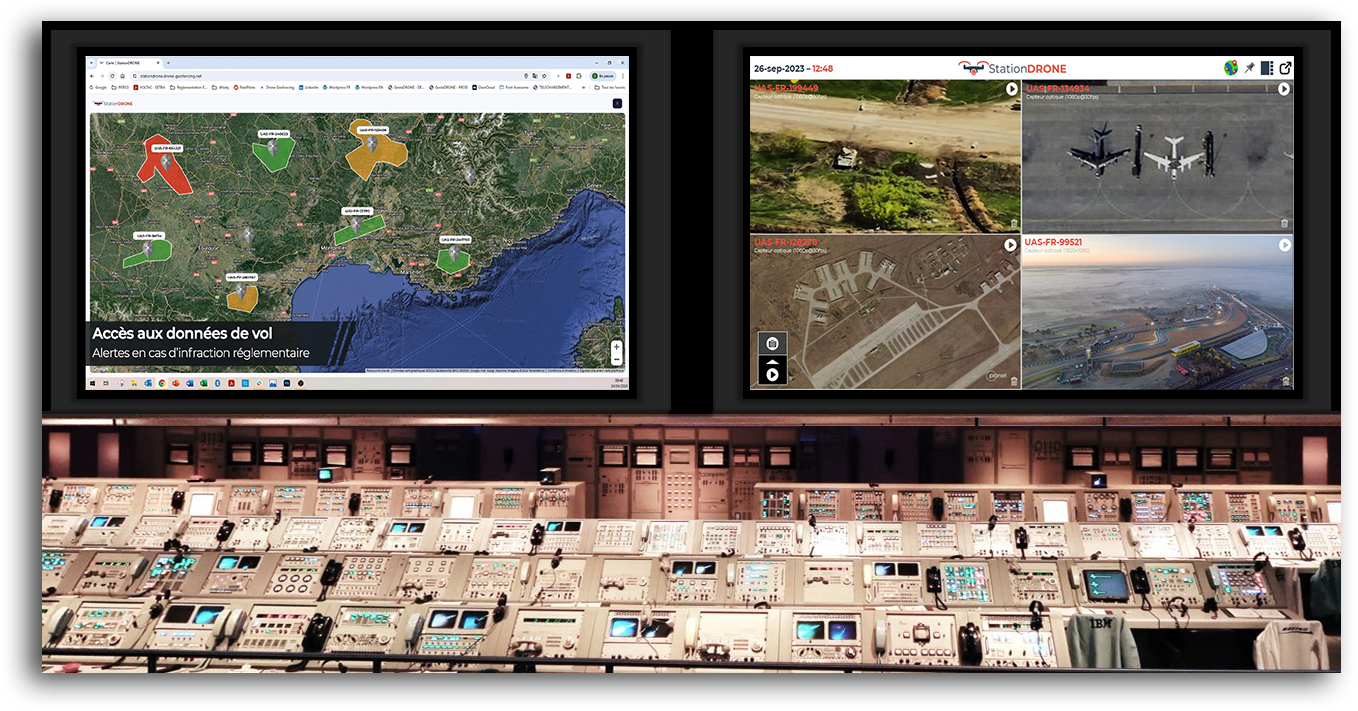
Note that our Gesta software solutionDRONE It also allows you to centralize all this information and update it in real time.
Secondly, the operator evaluates for each type of operation And For each model, the proven risks (on the ground and in the air) are assessed within a holistic scientific approach: ground risk study taking into account the drone's autonomy, its maximum speed, its mass, etc.
Finally, the operator will develop a strategy to mitigate air and ground risks.
- Equipment adaptation parachute, circuit breaker, etc.
- Tailored training plans
- Security perimeters: contingency zone, buffer zone, etc.
- Operation-specific procedures: emergency plan, etc.
This report provides an in-depth study (based on concrete calculations) of all the elements that make up the operation in order to anticipate and limit risks.
Despite everything discussed previously, it's important to note that the SORA method is complex and expensive, and can take up to nine months to complete. Even after it's drafted, there's no guarantee the application will be accepted by the relevant authorities.
To facilitate its acceptance, It is recommended to consult one of the few French aeronautical experts who is proficient in this type of regulatory procedure. in the person of Thierry Mohr (Aeropyxis Group).