
Storing drone aerial footage – The challenges
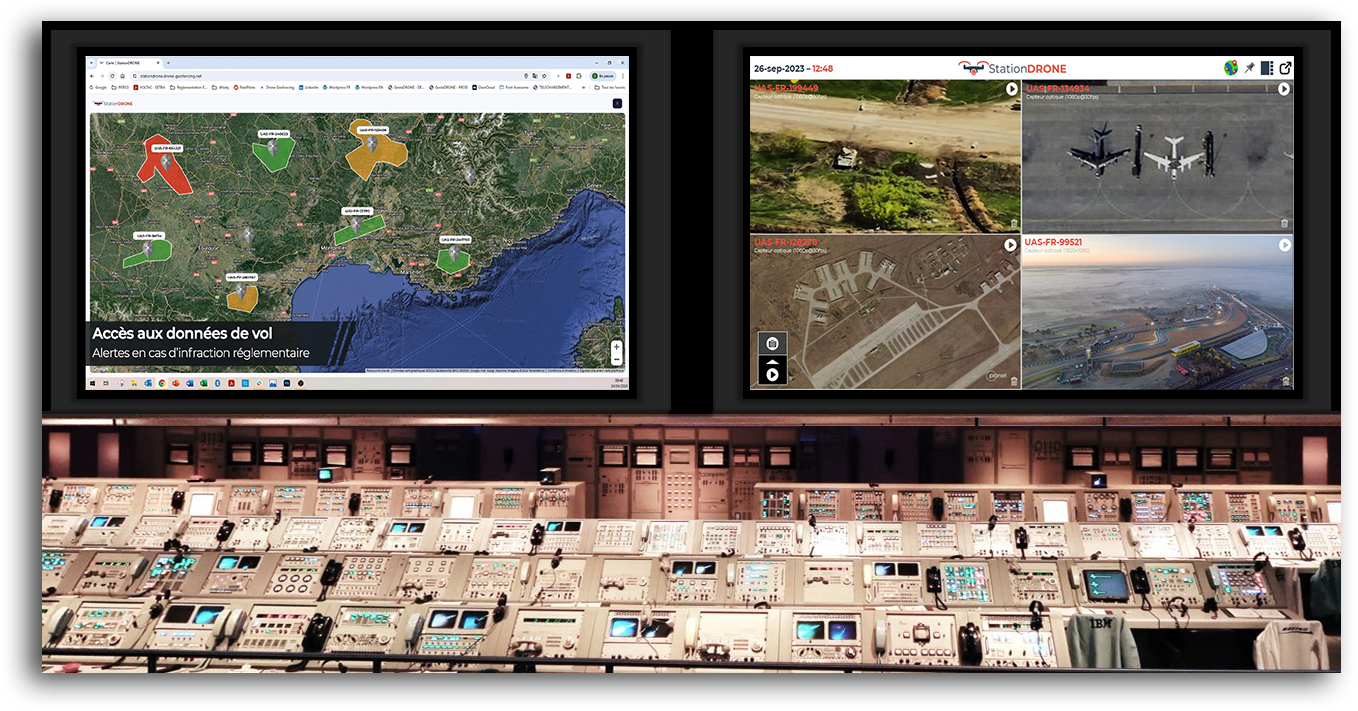
Drones are primarily used for aerial photography. These drone missions generate large amounts of multimedia content that drone operators struggle to collect, process, and archive securely.
But what size are we talking about?
The size of a video depends on many parameters, but we will mainly focus on two: (i) Image resolution (which is characterized by its number of pixels); and (ii) The number of images filmed per second (fps): American standard (30 fps); European standard (25 fps); New very high definition format (60 fps).
We performed some calculations to estimate the file size of one minute of video based on the chosen image resolution: (i) 720×1280 (30 fps): 60 MB ; (ii) HD ie 1920×1080 (30 fps): 130 MB ; (iii) 4K ie 3840 x 2160 (30 fps): 375 MB ; (iv) 8K ie 7 680×4320 (60 fps): 2 GB.
Given that a professional drone flies for around 30 minutes (including more than twenty minutes on site), the size of the videos generated can fluctuate between 1.2 GB and 40 GB for a single flight.
So, how much does it cost to archive filmed multimedia data?
A drone pilot who uses his drone intensively (approximately 100 flights per year) would need between 120 GB and 4 TB of storage space (depending on the resolution of his video device) to keep 1 year's archive of his flights.
As we can see… The resolution quality of the device directly impacts the operator's online storage budget. For a year of archiving, they will need to budget between…Between €10 and €336 excluding VAT per remote pilot per year.
Are there technological solutions to optimize this budget?
Major global research laboratories have been studying storage issues for a long time.
Lossy compression algorithms
One of their research focuses has been developing lossy compression algorithms to drastically reduce the size of stored files. However, these algorithms have significant limitations:
- High computational latency. High-performance, complex compression algorithms often need to analyze the file several times before compression.
- Inability to handle bursts of data;
- Sensitivity to extreme errors. Data transmission is subject to network errors and transmission interruptions. A single "inverted bit" will render a compressed file unusable, forcing the entire file to be retransmitted.
- Unable to search for information in a compressed file.
As we can see, the selection of a suitable compression algorithm must take into account many criteria and the user will have to identify the best compromise between: (i) Compression ratio; (ii) Image quality after decompression; (iii) Compression speed; and (iv) Decompression speed.
Compaction algorithms
For several years, many laboratories have been working on real-time compaction algorithms (i.e., a lossless compression algorithm that can compress and decompress in real time).
The performance of these algorithms allows video sizes to be reduced in much smaller proportions (a ratio of one to five). However, limitations remain in the format and nature of the data processed..
The GDPR
Since 2018, the GDPR regulation concerning the processing of personal data has been in force. This regulation specifies, in particular, that a company that has stored personal data must, at the request of its owner, be able to delete it from its servers and from the internet.
However, aerial filming of private property falls under the category of personal data. A drone operator must therefore be able to remove certain footage upon request. Currently, no effective tool exists to easily identify a prohibited shot within a 30-minute video.
This is troubling because this year in France, the first companies have been ordered to pay fines (up to 41.3 trillion of their turnover). Those sanctioned are currently large groups and a few mid-sized companies.
It is therefore quite possible that we will see a proliferation of audits for very small businesses in the coming years. It should be noted that some insurance companies have recently developed new products allowing businesses to protect themselves against the risk of GDPR fines.